
RBSE Class 11th 2026 HALF-YEARLY-DRAWING-1112-011225 Previous Year Papers
HALF-YEARLY-DRAWING-1112-011225 from the 2026 exam year is part of the Class 11th previous year papers archive on RBSE Solution. Many learners start here after finishing the textbook to see how questions were actually framed on the Rajasthan Board of Secondary Education (RBSE) paper.
Treat this question paper as a mock under gentle timing first, then as a marking exercise the second time. The introduction on this page is written only for this subject-and-year pair, not copied from other pages.
Bookmark the link if you coach juniors — the layout stays stable for search engines and classroom sharing.
Paper details
Quick reference for this previous year papers page — confirm board, class, and year & subject before you study.
| Board | RBSE |
|---|---|
| Class | Class 11th |
| Exam year | 2026 |
| Subject | HALF-YEARLY-DRAWING-1112-011225 |
| Resource type | Previous Year Papers |
| Category | RBSE Previous Year Question Papers |
| Website | RBSE Solution |
The table summarises this Previous Year Papers resource. Confirm RBSE, Class 11th, year 2026, and subject HALF-YEARLY-DRAWING-1112-011225 before studying.
RBSE Solution organises previous year papers so each URL carries chapter-specific guidance — better for students and for search engines than one generic paragraph for the whole class.
Turning 2026 papers into insight
One HALF-YEARLY-DRAWING-1112-011225 paper reveals style; several from the same year reveal pattern. After this page, open sibling subjects listed below to see whether marks cluster in certain units.
Keep rough work dated in your notebook. Examiners in Class 11th expect clear numbering even in practice sessions.
RBSE Class 11th 2026 HALF-YEARLY-DRAWING-1112-011225
Scroll through the Previous Year Papers pages for HALF-YEARLY-DRAWING-1112-011225 (2026).
Rajasthan Board Class 11th HALF-YEARLY-DRAWING-1112-011225 2026 solved Previous Year Question Papers
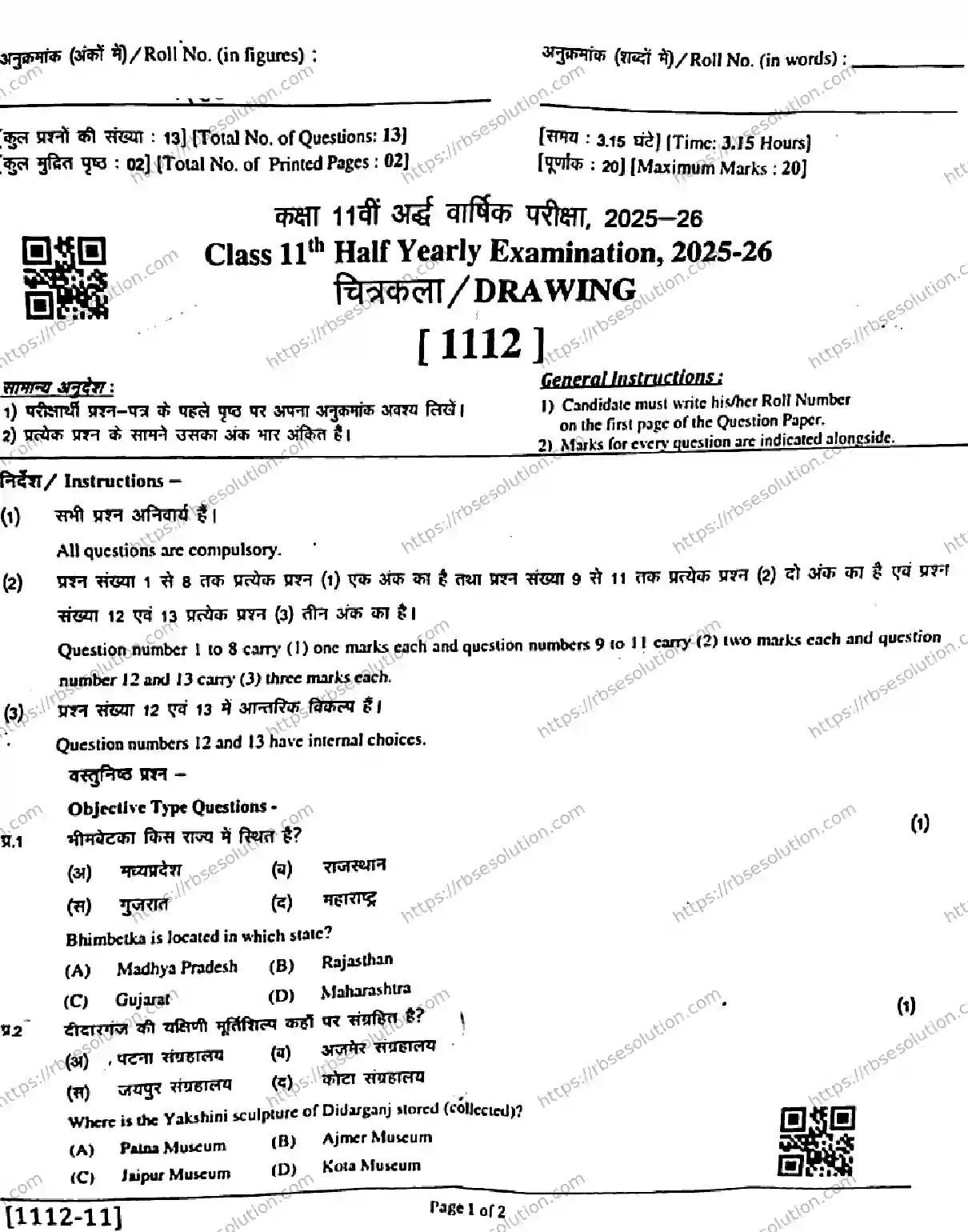
कक्षा 11वीं अर्द्ध वार्षिक परीक्षा, 2025-26
चित्रकला / DRAWING
अनुक्रमांक (अंकों में) / Roll No. (in figures) : ___________ अनुक्रमांक (शब्दों में) / Roll No. (in words) : ___________
कुल प्रश्नों की संख्या : 49 [Total No. of Questions: 43] समय : 3:45 घंटे (Time: 3:45 Hours)
कुल मुद्रित पृष्ठ : 02 [Total No. of Printed Pages : 02] अधिकतम अंक : 20
सामान्य अनुदेश : General Instructions :
- परीक्षार्थी प्रश्न-पत्र के पहले पृष्ठ पर अपना अनुक्रमांक अवश्य लिखें। Candidate must write his/her Roll Number on the first page of the Question Paper.
- प्रत्येक प्रश्न के सामने उसका अंक भार अंकित है। Marks for every question are indicated alongside.
निर्देश / Instructions :
- सभी प्रश्न अनिवार्य हैं। All questions are compulsory.
- प्रश्न संख्या 1 से 8 तक प्रत्येक प्रश्न (1) एक अंक का है तथा प्रश्न संख्या 9 से 11 तक प्रत्येक प्रश्न (2) दो अंक का है एवं प्रश्न संख्या 12 एवं 13 प्रत्येक प्रश्न (3) तीन अंक का है। Questions number 1 to 8 carry (1) one mark each and question numbers 9 to 11 carry (2) two marks each and question number 12 and 13 carry (3) three marks each.
- प्रश्न संख्या 12 एवं 13 में आन्तरिक-विकल्प है। Question numbers 12 and 13 have internal choices.
वस्तुनिष्ठ प्रश्न - Objective Type Questions
प्रश्न 1. भीमबेटका किस राज्य में स्थित है? (1 अंक)
Bhimbetka is located in which state?
- (A) मध्यप्रदेश (Madhya Pradesh) ✓ सही उत्तर
- (B) राजस्थान (Rajasthan)
- (C) गुजरात (Gujarat)
- (D) महाराष्ट्र (Maharashtra)
व्याख्या: भीमबेटका मध्य प्रदेश के रायसेन जिले में स्थित एक प्रागैतिहासिक गुफा स्थल है, जो अपने शैलचित्रों के लिए प्रसिद्ध है।
प्रश्न 2. दीदारगंज की यक्षिणी मूर्तिशिल्प कहां पर संग्रहित है? (1 अंक)
Where is the Yakshini sculpture of Didarganj stored (collected)?
- (A) पटना संग्रहालय (Patna Museum) ✓ सही उत्तर
- (B) अजमेर संग्रहालय (Ajmer Museum)
- (C) जयपुर संग्रहालय (Jaipur Museum)
- (D) कोटा संग्रहालय (Kota Museum)
व्याख्या: दीदारगंज (बिहार) से प्राप्त यक्षिणी की यह प्रसिद्ध मूर्ति वर्तमान में पटना संग्रहालय में संग्रहित है। यह मौर्यकालीन कला का उत्कृष्ट उदाहरण है।
[P.T.O. / 442-1 Page 1 of 2]
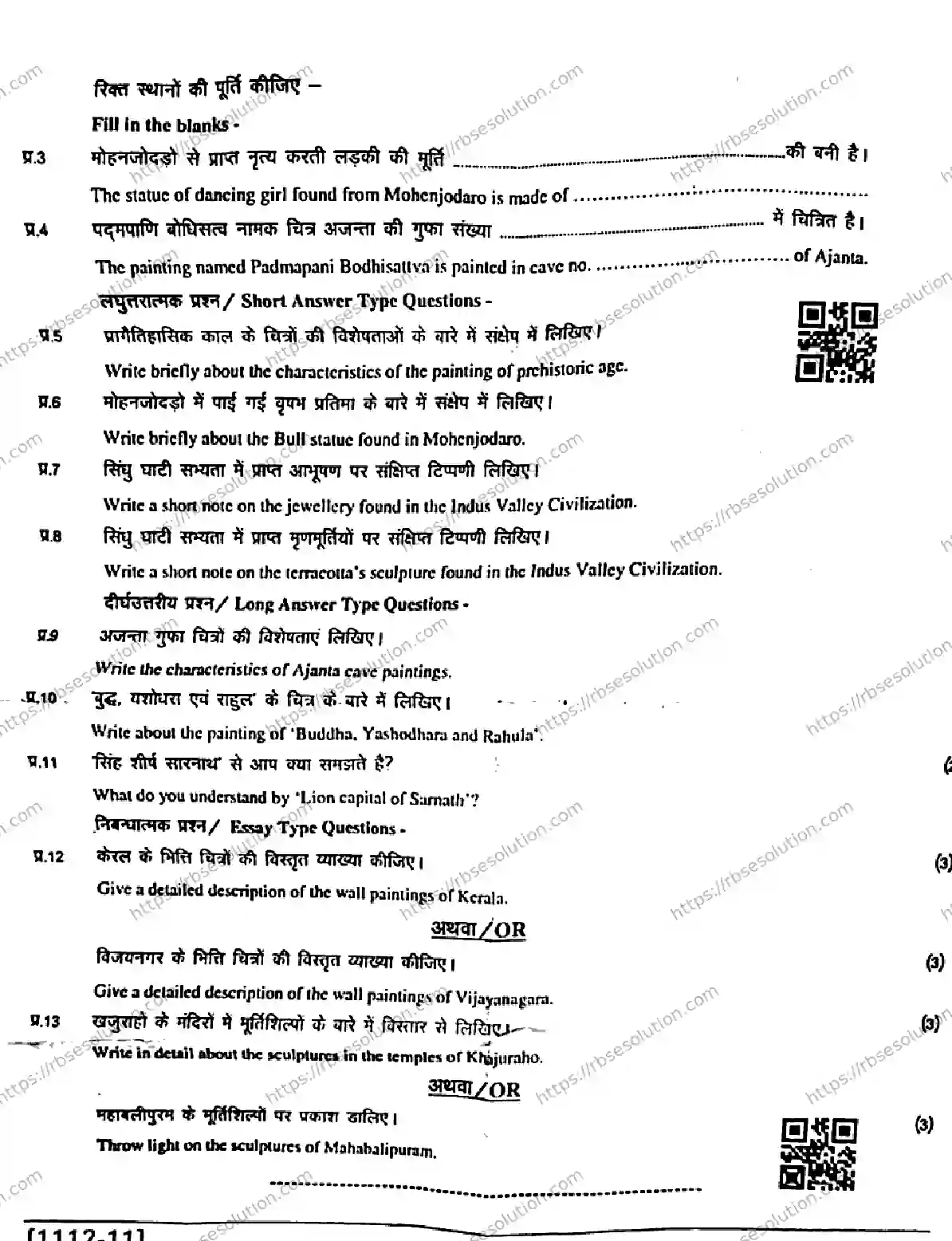
रिक्त स्थानों की पूर्ति कीजिए —
Fill in the blanks —
-
मोहनजोदड़ो से प्राप्त नृत्य करती लड़की की मूर्ति कांस्य की बनी है।
The statue of dancing girl found from Mohenjodaro is made of bronze.
-
पद्मपाणि बोधिसत्व नामक चित्र अजन्ता की गुफा संख्या 1 में चित्रित है।
The painting named Padmapani Bodhisattva is painted in cave no. 1.
लघुत्तरात्मक प्रश्न / Short Answer Type Questions
-
प्रागैतिहासिक काल के चित्रों की विशेषताओं के बारे में संक्षेप में लिखिए।
Write briefly about the characteristics of the painting of prehistoric age.
उत्तर: प्रागैतिहासिक काल के चित्र मुख्यतः गुफाओं की दीवारों पर बनाए गए थे। इनमें शिकार के दृश्य, जानवरों (जैसे बाइसन, हिरण, घोड़े) और मानव आकृतियाँ प्रमुख हैं। ये चित्र प्राकृतिक रंगों (लाल, पीला, काला) से बनाए गए थे और इनमें गति तथा जीवंतता का भाव स्पष्ट दिखता है। चित्रों का उद्देश्य संभवतः धार्मिक अनुष्ठान या शिकार की सफलता के लिए जादुई विश्वास से जुड़ा था।
Answer: Prehistoric paintings were mainly made on cave walls. They depict hunting scenes, animals (like bison, deer, horses) and human figures. These paintings were made using natural colors (red, yellow, black) and show a sense of movement and vitality. The purpose of these paintings was likely related to religious rituals or magical beliefs for successful hunting.
-
मोहनजोदड़ो में पाई गई वृषभ प्रतिमा के बारे में संक्षेप में लिखिए।
Write briefly about the Bull statue found in Mohenjodaro.
उत्तर: मोहनजोदड़ो से प्राप्त वृषभ (बैल) की प्रतिमा सिंधु घाटी सभ्यता की उत्कृष्ट मूर्तिकला का उदाहरण है। यह प्रतिमा साबुन के पत्थर (स्टीटाइट) से बनी है और इसमें बैल को गर्दन ऊपर उठाए, शक्तिशाली और गर्वित मुद्रा में दिखाया गया है। इसकी सतह पर पॉलिश की गई है और शारीरिक संरचना को यथार्थवादी ढंग से उकेरा गया है। यह मूर्ति सिंधु घाटी के लोगों की कलात्मक क्षमता और पशुओं के प्रति उनके लगाव को दर्शाती है।
Answer: The bull statue found from Mohenjodaro is an excellent example of Indus Valley sculpture. It is made of steatite (soapstone) and shows the bull with its neck raised, in a powerful and proud posture. Its surface is polished and the anatomical details are carved realistically. This statue reflects the artistic skill of the Indus people and their attachment to animals.
-
सिंधु घाटी सभ्यता के आभूषणों पर संक्षिप्त टिप्पणी लिखिए।
Write a short note on the jewellery found in the Indus Valley Civilization.
उत्तर: सिंधु घाटी सभ्यता में आभूषणों का प्रचलन व्यापक था। ये आभूषण सोने, चांदी, तांबे, हाथीदांत, शंख, अर्ध-कीमती पत्थरों (जैसे कार्नेलियन, लापीस लाजुली) और मिट्टी से बनाए जाते थे। इनमें हार, कंगन, अंगूठियां, झुमके और माथे की पट्टियां शामिल थीं। आभूषणों की डिजाइन में ज्यामितीय पैटर्न और प्राकृतिक रूपांकनों का उपयोग हुआ है। ये न केवल सजावट के लिए बल्कि सामाजिक स्थिति और धार्मिक विश्वासों के प्रतीक भी थे।
Answer: Jewellery was widely used in the Indus Valley Civilization. It was made from gold, silver, copper, ivory, shell, semi-precious stones (like carnelian, lapis lazuli) and clay. It included necklaces, bangles, rings, earrings and forehead bands. The designs used geometric patterns and natural motifs. These were not only for decoration but also symbols of social status and religious beliefs.
-
सिंधु घाटी सभ्यता में प्राप्त मृणमूर्तियों पर संक्षिप्त टिप्पणी लिखिए।
Write a short note on the terracotta sculptures found in the Indus Valley Civilization.
उत्तर: सिंधु घाटी सभ्यता में मृणमूर्तियाँ (टेराकोटा) बड़ी संख्या में प्राप्त हुई हैं। ये मूर्तियाँ मुख्यतः मातृदेवी, पशु (बैल, भैंस, बंदर), पक्षी और मानव आकृतियों की हैं। मातृदेवी की मूर्तियों में उर्वरता का प्रतीकात्मक चित्रण मिलता है। ये मूर्तियाँ हाथ से बनाई गई हैं और इनमें सादगी तथा स्थानीय शैली का प्रभाव दिखता है। मृणमूर्तियाँ संभवतः धार्मिक अनुष्ठानों और खिलौनों के रूप में उपयोग होती थीं।
Answer: A large number of terracotta sculptures have been found in the Indus Valley Civilization. These sculptures mainly depict mother goddesses, animals (bull, buffalo, monkey), birds and human figures. The mother goddess figurines symbolically represent fertility. These sculptures are handmade and show simplicity and local style influence. Terracotta figures were likely used for religious rituals and as toys.
दीर्घउत्तरीय प्रश्न / Long Answer Type Questions
-
अजन्ता गुफा चित्रों की विशेषताएं लिखिए।
Write the characteristics of Ajanta cave paintings.
उत्तर: अजन्ता गुफा चित्र भारतीय चित्रकला के उत्कृष्ट नमूने हैं। इनकी प्रमुख विशेषताएँ निम्नलिखित हैं:
- धार्मिक विषय: अधिकांश चित्र बौद्ध धर्म से संबंधित हैं, जिनमें जातक कथाओं और बुद्ध के जीवन के दृश्यों का चित्रण है।
- प्राकृतिक रंग: चित्रों में प्राकृतिक रंगों (खनिज और वनस्पति) का उपयोग किया गया है, जो आज भी जीवंत हैं।
- यथार्थवाद और भावनाएँ: चित्रों में मानवीय भावनाओं (करुणा, शांति, भक्ति) का सजीव चित्रण मिलता है।
- रचना और परिप्रेक्ष्य: चित्रों में दृश्यों को क्रमबद्ध रूप में प्रस्तुत किया गया है और परिप्रेक्ष्य का प्रभावी उपयोग हुआ है।
- अलंकरण: चित्रों में फूल-पत्तियों, आभूषणों और वस्त्रों का बारीक अलंकरण किया गया है।
- प्रकाश-छाया: चित्रों में प्रकाश और छाया का कुशल प्रयोग किया गया है, जिससे आकृतियाँ त्रिआयामी प्रतीत होती हैं।
Answer: Ajanta cave paintings are excellent examples of Indian painting. Their main characteristics are:
- Religious themes: Most paintings are related to Buddhism, depicting Jataka tales and scenes from Buddha's life.
- Natural colors: Natural colors (mineral and vegetable) were used, which are still vibrant.
- Realism and emotions: Human emotions (compassion, peace, devotion) are depicted vividly.
- Composition and perspective: Scenes are presented in a sequential manner with effective use of perspective.
- Ornamentation: Fine ornamentation of flowers, jewellery and garments is done.
- Light and shade: Skilful use of light and shade makes the figures appear three-dimensional.
-
बुद्ध, यशोधरा और राहुल के चित्र के बारे में लिखिए।
Write about the painting of 'Buddha, Yashodhara and Rahula'.
उत्तर: यह चित्र अजन्ता गुफा संख्या 17 में स्थित है और बौद्ध चित्रकला का एक अत्यंत भावुक दृश्य प्रस्तुत करता है। इसमें भगवान बुद्ध अपने गृहत्याग के बाद पहली बार अपनी पत्नी यशोधरा और पुत्र राहुल से मिलते हैं। चित्र में बुद्ध शांत और करुणामय मुद्रा में हैं, जबकि यशोधरा के चेहरे पर मिलन की खुशी और वियोग की पीड़ा दोनों झलकती हैं। राहुल अपने पिता के सामने भिक्षा मांगता है। इस चित्र में मानवीय भावनाओं का अद्भुत चित्रण हुआ है और रंगों का सामंजस्य देखने लायक है।
Answer: This painting is located in Ajanta cave no. 17 and presents a very emotional scene of Buddhist painting. It shows Lord Buddha meeting his wife Yashodhara and son Rahula for the first time after his renunciation. Buddha is in a calm and compassionate posture, while Yashodhara's face reflects both the joy of reunion and the pain of separation. Rahula asks for alms from his father. This painting wonderfully depicts human emotions and the harmony of colors is remarkable.
-
'सारनाथ का सिंह शीर्ष' से आप क्या समझते हैं?
What do you understand by 'Lion capital of Sarnath'?
उत्तर: सारनाथ का सिंह शीर्ष भारत का राष्ट्रीय प्रतीक है। यह सम्राट अशोक द्वारा सारनाथ में स्थापित एक स्तंभ का शीर्ष भाग है। इसमें चार शेर एक वृत्ताकार आधार पर पीठ से पीठ सटाकर बैठे हैं। आधार पर एक घंटी के आकार का कमल, एक धर्मचक्र और चार पशु (हाथी, घोड़ा, बैल, शेर) उकेरे गए हैं। यह मूर्ति मौर्य काल की उत्कृष्ट कला का प्रतीक है और बौद्ध धर्म के प्रसार तथा अशोक के शासन का प्रतिनिधित्व करती है। इसे 26 जनवरी 1950 को भारत के राष्ट्रीय प्रतीक के रूप में अपनाया गया।
Answer: The Lion Capital of Sarnath is the national emblem of India. It is the top part of a pillar erected by Emperor Ashoka at Sarnath. It features four lions sitting back to back on a circular base. The base has a bell-shaped lotus, a dharma chakra and four animals (elephant, horse, bull, lion) carved on it. This sculpture is a masterpiece of Mauryan art and represents the spread of Buddhism and Ashoka's rule. It was adopted as the national emblem of India on 26 January 1950.
निबन्धात्मक प्रश्न / Essay Type Questions
-
केरल के भित्ति चित्रों की विस्तृत व्याख्या कीजिए।
Give a detailed description of the wall paintings of Kerala.
उत्तर: केरल के भित्ति चित्र भारतीय चित्रकला की एक महत्वपूर्ण शैली हैं। ये मुख्यतः मंदिरों और महलों की दीवारों पर पाए जाते हैं। इनकी प्रमुख विशेषताएँ निम्नलिखित हैं:
- धार्मिक विषय: अधिकांश चित्र हिंदू देवी-देवताओं (विशेषकर विष्णु, शिव, देवी) और पौराणिक कथाओं पर आधारित हैं।
- रंग योजना: इनमें प्रमुख रूप से लाल, पीला, हरा, नीला और सफेद रंगों का प्रयोग हुआ है। पृष्ठभूमि प्रायः लाल रंग की होती है।
- आकृतियाँ: आकृतियाँ बड़ी, सुडौल और अलंकृत होती हैं। आँख